
The Problem With Sharing Your Problems, With People Who Know You

Have you ever told someone something personal — and immediately felt lighter? Like a weight just lifted off your chest. And then, weeks or months later, that same thing came back to you. Not as support. As a reminder. Or worse, as a weapon.
If yes, you’re not alone. Most of us have been there.

This actually happened with someone very close to me. My friend, Priya. We’ve known each other for years,
Priya is 28, works at a mid-sized company in Bangalore. Good job, decent salary. And a boss who honestly makes her life a little difficult. Not in a dramatic way. Just the kind of boss who takes credit, dismisses ideas in meetings, and makes you feel invisible on most days.
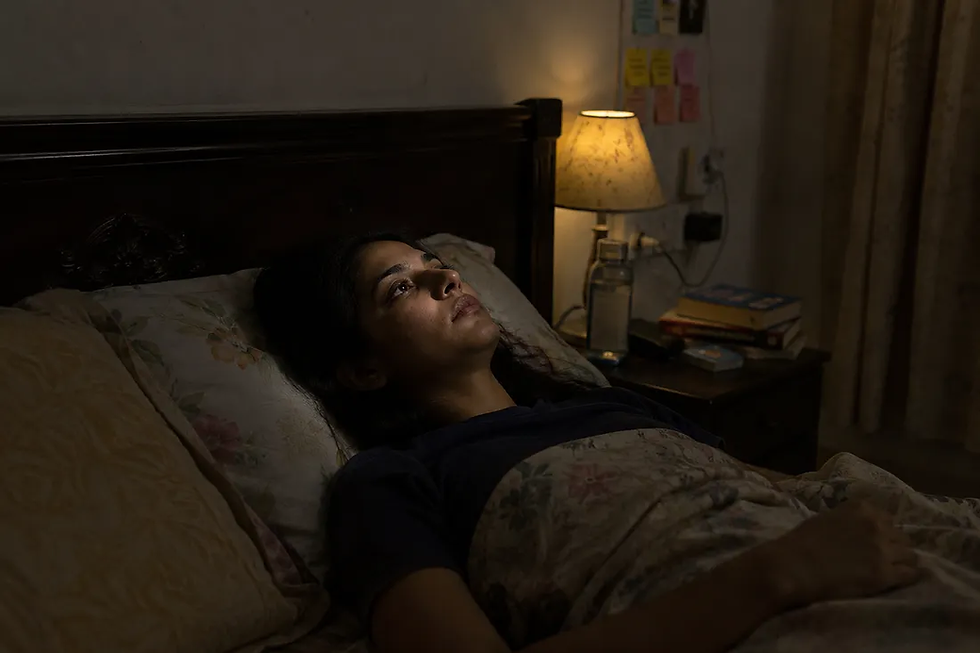
One evening she called me. She was tired, a little frustrated. She vented about how her boss treated her unfairly that day. How she had worked three weeks on a proposal and he barely acknowledged it. How she was starting to dread going to work.
I listened. I told her what any friend would, that her boss sounded awful, that she deserved better, that she shouldn’t let him get to her.
She felt better. We talked for another hour about other things and hung up laughing. I thought nothing of it.

Six months later, Priya got promoted. Unexpected, well deserved. She called me excited.
And our mutual friend Nisha, who had heard about that one tired evening, said — “Wow, so your terrible boss gave you a promotion?”
Said as a joke. Nobody meant anything by it. But something shifted in that moment. Because that one vulnerable evening — that one phone call where Priya was just tired and human — had quietly become the version of her that people were carrying around. The girl who complained about her boss. That was the story now.
A few weeks later at a family dinner, her mother mentioned casually — “Priya was so stressed with her job, remember? She used to be so upset about her boss.”
Priya did not cry. She vented once, to someone she trusted. But that’s not how it was being told anymore.
Her maasi looked at her sympathetically. “Beta, itni problems thi toh batati, hum help karte.”
Priya smiled and said everything was fine now. But something sat uncomfortably with her. She had shared something personal, in a private moment. And now it was a story being passed around at dinner tables she wasn’t even present at.

And then came the moment that really stung.
A few months later, Priya and Nisha had a small argument. Nothing major — a plan that fell through, some miscommunication. Normal friendship stuff. But somewhere in the middle of it Nisha said — “You always do this. Even with your boss you used to just complain instead of actually doing something.”
And there it was.
That one tired evening on the phone. That one moment of trusting someone. Now it was character evidence. It wasn’t about what Priya had gone through anymore. It was about who Priya apparently was.
She told me later that she didn’t even argue back. She just went quiet. And made a mental note — next time, she won’t share.

Most of us reach that point eventually.
We share something real, something that took actual courage to say out loud. And then slowly, quietly, we learn that honesty with the people closest to us has a cost.
It’s not that Nisha is a bad person. She isn’t. It’s just that human beings store stories. Especially emotional ones. And once someone has a story about you, a moment where you were struggling, uncertain, not your best self , that story doesn’t go away. It becomes part of how they see you forever.
In Indian families and friendships this runs especially deep. We grow up in close-knit circles where everyone knows everyone. Your moment of weakness doesn’t stay between two people. It travels. It gets retold, sometimes with good intentions, sometimes not , but it gets retold.
And slowly, without anyone meaning harm, your vulnerability becomes your label.
The one who had job problems. The one whose marriage was rocky. The one who couldn’t handle pressure.
Nobody meant to reduce you to that. But here you are.
So what do most people do? They stop sharing. They carry things alone. They smile at dinners and say sab theek hai while something quietly eats at them from the inside. Or they find another way.
Some people write. Not to be read, just to get it out. There’s something about putting words somewhere when you know nobody who knows you will ever read them. No context. No history. No judgment waiting on the other side.
Just honesty. Finally, without a cost.

Wouldn’t it be something, if there was a place where you could be completely, embarrassingly, messily honest. Where nobody knows your name. Nobody will bring it up at dinner. Nobody will use it in an argument six months later.
Where a moment stays a moment. And doesn’t become a story someone else tells about you.
If that’s something you’ve ever needed, try The Open Diary. It’s an anonymous space where people write openly , their problems, their happy moments, their thoughts they can’t share with anyone who knows them. No names. No judgement. Just people being honest with each other.
See how it feels. Sometimes just knowing someone out there read your words, without knowing who you are , is enough.
The Open Diary
Instagram- https://www.instagram.com/theopen.diary
Download IOS App- https://apps.apple.com/in/app/the-confession-boxx/id1669238279
Download Google Play – https://play.google.com/store/apps/details


Comments